Frontier Daily, 30 March: Conflict widens as Houthis enter war; EM sells off

Jamie Fallon
—
Economist
30 Mar 2026
Posts
Ukraine 2036s -3.1%; EU funding delays risk defence financing gap, raising probability of financing by central bank
Lebanon 2035s -2.2%; Israel’s planned expansion of buffer zone heightens conflict risk and uncertainty over control
Bolivia 2030s -0.6%; vulnerable to oil price rise and gold price decline, reserves heavily concentrated in gold (c84%)
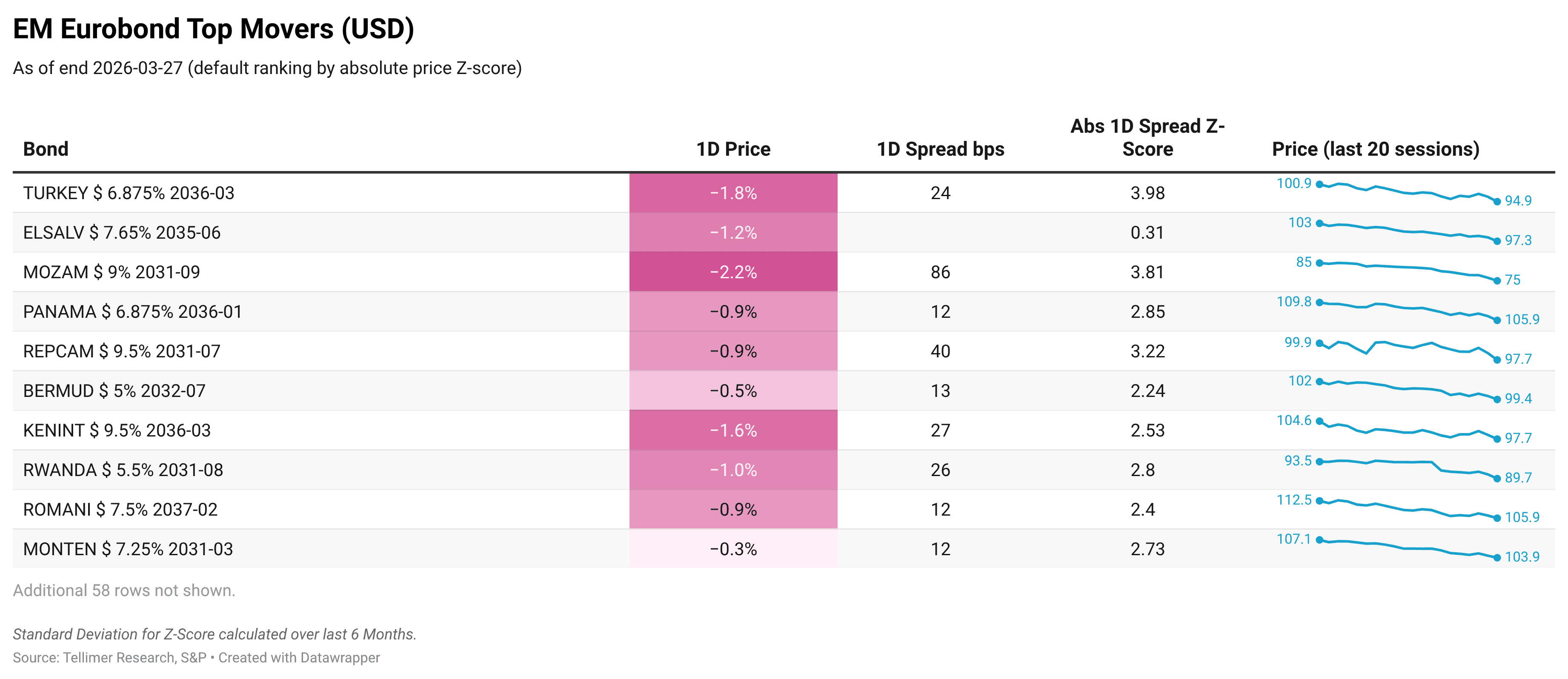
EM eurobonds extended losses on Friday (prices -0.5%, spreads +10bps) as global risk appetite weakened amid fading expectations for a near-term reopening of the Strait of Hormuz, following Trump’s decision to extend the deadline on potential strikes against Iranian energy infrastructure. Missile exchanges between the US, Israel and Iran continued through the weekend, keeping geopolitical risk elevated.
Oil prices surged sharply today (Brent +2.4% to US$107.8/bbl, at the time of writing) after Yemen’s Houthis launched missiles at Israel, marking a further escalation in the conflict. Although Pakistan has offered to host US-Iran talks, the intensifying violence and rhetoric suggest limited prospects for de-escalation in the near term.
The Houthis’ entry into the conflict significantly broadens its geographic scope and raises downside risks for energy markets. Given their demonstrated capability to target oil infrastructure and key shipping lanes, including the Red Sea and Saudi export routes, their involvement undermines assumptions that Gulf supply can bypass Hormuz, reinforcing the likelihood of a more prolonged and disruptive conflict with wider macro and market implications.
Read the full report on the Tellimer App
Jamie Fallon is an economist @ Tellimer focussed on emerging market macro research.