Egypt Macro-Dive: why local rates still matter

James Blanning
—
Senior Economist
3 Sept 2025
Posts
Slow pace of privatisations continues to be a drag on the IMF programme, despite progress on the fiscal and reserves
Falling inflation and stable FX have allowed the central bank to start its cutting cycle, with more to come
We retain our Buy on the local rates, and retain a Hold on the eurobonds
Egypt’s structural current account deficit, compounded by ongoing issues on the Suez Canal, continues to drive elevated external funding neds. However, there have been some recent improvements, with remittances and tourism increasingly helping to plug the gap.
Liquidity buffers are also looking much healthier than in 2024, as the central bank has managed to continue accumulating reserves following injections from Gulf Cooperation Council (GCC) members. Gross international reserves have risen to cover 6 months of goods imports as of July 2025, compared to 4.9 months in February 2024.
Despite a lack of progress on privatisations and continued external funding needs, we think that Egypt will be able to continue to roll maturing Eurobonds. Despite no near-term solution to the country’s perennial external imbalances, replenished reserve buffers and a relatively attractive spread motivate our continued Hold on the external debt but we move to the front end of the curve for a more defensive position.
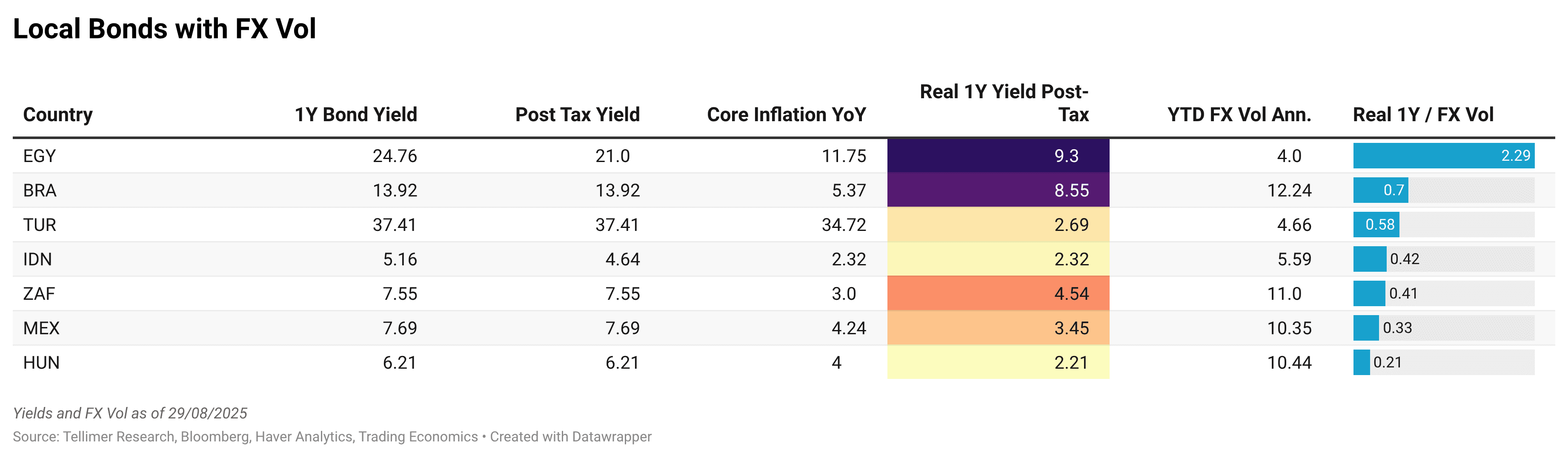
The central bank has managed to contain inflation through a restrictive policy, creating some of the highest real rates in the EM space. Local bills and bonds have not substantially reacted to the rate cutting cycle, and thanks to contained currency volatility, we see opportunities in both the carry trade and further out the curve, where higher duration can benefit from rallying rates.
Read the full report on the Tellimer App
James Blanning is Senior Economist at Tellimer.